
How to Tell If a Fuse Is Blown
Blown fuses are a common household issue. At some point, almost every homeowner will face this problem. But don’t worry, understanding how to spot a blown fuse and replace it isn’t as hard as it sounds. In this post, we’ll explain everything in simple steps, with tips to keep your electrical system safe.
What is a Fuse?
A fuse is a safety device in your electrical system. Its job? To stop electricity when there’s too much current flowing through a circuit.
Here’s how it works:
- Inside the fuse is a thin wire or strip.
- When the current gets too high, the wire heats up and melts.
- This breaks the circuit and stops the flow of electricity.
Types of Fuses
Knowing the type of fuse in your home helps when it’s time to replace one. Common types include:
1. Plug Fuses
Screw into older fuse boxes.
2. Cartridge Fuses
Cylindrical and often used for appliances.
3. Blade Fuses
Found in cars and smaller electrical systems.
4. Glass Tube Fuses
Transparent, making it easy to see if they’ve blown.

Check for Signs If You Have a Blown Fuse
Not sure if a fuse is blown? Follow these simple steps to check:
Step 1: Turn Off the Power
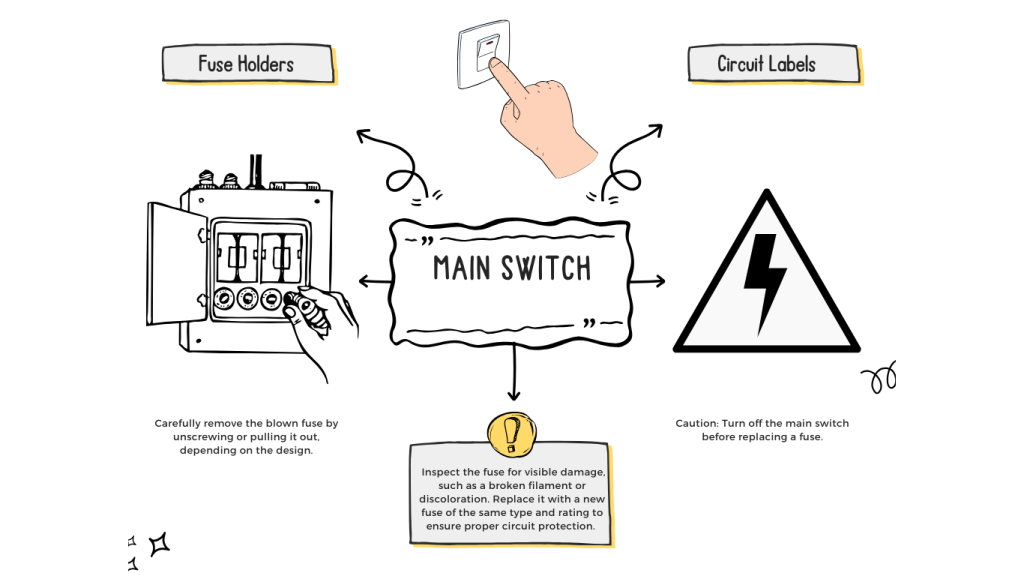
Safety first. Turn off all appliances connected to the circuit and switch off the main power. This prevents shocks while you work.
Step 2: Locate the Fuse Box
Find the fuse box, usually in: -The basement. - A garage. - A utility room. It’s often a metal box with a door that swings open.
Step 3: Inspect the Fuses
Take a closer look at the fuses. Here’s what to check:
- Visible Signs of Damage: Burn marks, melted wires, or a cloudy appearance in the glass.
- Testing with a Multimeter:
1. Set the multimeter to “continuity.”
2. Touch the probes to the ends of the fuse.
3. If it beeps or shows a reading, the fuse is fine. No sound? It’s blown.
Step 4: Find the Cause
Blown fuses often indicate a problem. Check for overloaded outlets, faulty devices, or damaged cords.
How to Fix a Blown Fuse
Fixing a blown fuse is easy if you follow these steps.
What You’ll Need
- A flashlight (if it’s dark).
- A replacement fuse with the same rating.
- Insulated gloves for safety.
Step 1: Remove the Blown Fuse
Carefully unscrew or pull out the blown fuse. If it’s stuck, use insulated pliers to wiggle it free.
Step 2: Insert the New Fuse
Place the new fuse in the same slot. Make sure it fits snugly. Double-check the amperage matches the old one.
Step 3: Turn the Power Back On
Restore power at the main breaker and test the circuit. If the fuse blows again, call an electrician.
Tips to Prevent Blown Fuses
Avoiding blown fuses is all about managing your electricity wisely. Here are some tips:
Spread out appliances like heaters, microwaves, and air conditioners. Too many high-power devices on one circuit can overload it.
Protect your electronics from sudden power surges.
- If you have an older home with a fuse box, consider upgrading to a modern circuit breaker panel. It’s safer and more efficient.
Hire a licensed electrician to check your system every few years. This helps catch problems early.

Signs You Should Call a Professional
Sometimes, it’s better to leave electrical issues to the pros. Call an electrician if:
- A fuse keeps blowing repeatedly.
- You smell something burning near the fuse box.
- You see smoke or sparks.
- You’re unsure how to replace a fuse safely.
Conclusion
A blown fuse might seem like a big problem, but with the right approach, it’s easy to fix. By understanding what causes fuses to blow and knowing how to replace them, you can handle minor electrical issues with confidence.
However, safety always comes first. If you’re ever unsure, don’t hesitate to contact a professional electrician. For reliable service, visit Ak Electrical and let the experts at AK Electrical help you.